
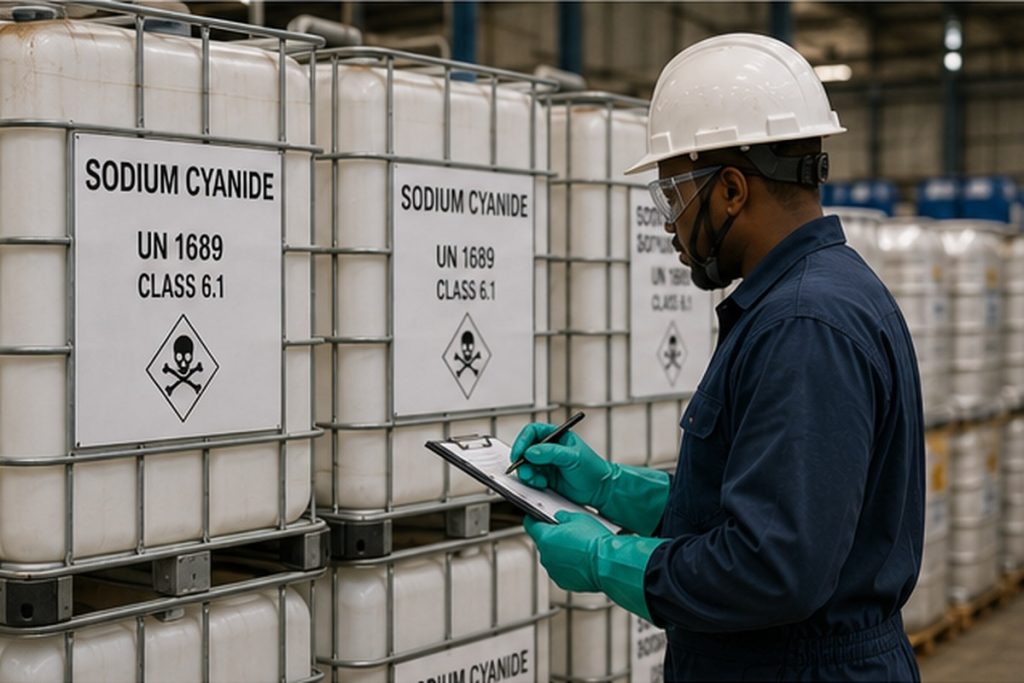

Sodium Cyanide Is a High-Consequence Procurement Category
In many gold recovery operations, sodium cyanide is an essential process reagent. It is also acutely hazardous, which means purchasing decisions have implications for workers, communities, transporters, the environment and production continuity.
For that reason, sodium cyanide Ghana mining procurement should never be reduced to a comparison of price per tonne. Responsible sourcing requires scrutiny of the manufacturer, transport chain, packaging, documentation, delivery arrangements, site readiness and emergency capability. A useful next step is our guide on hydrogen Peroxide in Mining: Cyanide Detoxification and Procurement Considerations, which looks at the related practical considerations in more detail.
The International Cyanide Management Code provides a useful global benchmark. It specifically addresses responsible production and purchasing, transportation, handling and storage, operational management, worker safety, emergency response, training and public reporting.
Begin With Responsible Manufacture
The Cyanide Code encourages mining operations to purchase cyanide from certified manufacturers that use appropriate practices to limit worker exposure and prevent environmental releases. A useful next step is our guide on activated Carbon in Gold Recovery: What Ghana's Mining Operations Need to Know, which looks at the related practical considerations in more detail.
For procurement, this turns manufacturer status into a supplier-qualification question. Buyers should understand where the material is produced, who is responsible for the supply chain, what certifications or assurance systems apply and whether those claims can be verified. A useful next step is our guide on how Mining Companies Can Reduce Chemical Supply Interruptions, which looks at the related practical considerations in more detail.
Commercial intermediaries can play a useful role in sourcing, but the mine should still maintain visibility of the actual manufacturer and the parties responsible for transport and storage.
Treat Transportation as Part of the Purchase
A sodium cyanide purchase is not complete when the product leaves the factory. The material may travel through ocean freight, port handling, interim storage and road transport before reaching the mine.
The Cyanide Code calls for clear responsibility for safety, security, release prevention, training and emergency response throughout transportation and delivery. It also expects suitable transport equipment, shipment tracking and appropriate emergency-response arrangements.
For Ghanaian mines receiving imported cyanide, the practical procurement discussion should therefore include route, transporter capability, handover points, documentation, security, contingency planning and responsibility if a shipment is delayed or damaged. A useful next step is our guide on flocculants in Mineral Processing: How Polyacrylamide Supports Solid-Liquid Separation, which looks at the related practical considerations in more detail.
Packaging and Delivery Configuration Matter
The required packaging and delivery configuration should match the mine’s unloading and storage system. Procurement should not approve a packaging change simply because it improves price or availability.
Before a new format is accepted, operations and HSE should confirm that unloading equipment, storage areas, access controls and procedures are appropriate. Any change that affects manual handling, lifting, containment or mixing should be reviewed before the shipment is dispatched.
The same principle applies to order size. A commercially attractive bulk purchase is not attractive if it creates unsafe or impractical storage conditions.
Storage Must Be Ready Before the Truck Arrives
The Cyanide Code calls for unloading, storage and mixing facilities designed and operated to prevent or contain releases and control worker exposure. That means site readiness is a procurement dependency, not a warehouse problem to solve after delivery.
Before increasing inventory or changing supply arrangements, the mine should confirm available capacity, segregation, security, containment, inspection and maintenance requirements.
Receiving procedures should also be clear. The site should know who authorises receipt, what documents are checked, how packaging condition is inspected and how discrepancies are escalated.
Documentation Should Travel With the Decision
Procurement records should identify the agreed product, manufacturer, quantity, packaging, batch or shipment information, delivery responsibility and required safety and quality documents.
Safety Data Sheets and transport documentation need to be current and accessible to the people who use them. The receiving team should know what documentation must be present before a delivery is accepted.
Where company policy or contract requirements reference the Cyanide Code or another assurance framework, those requirements should appear in supplier agreements rather than existing only as informal expectations.
Emergency Readiness Is Part of Supplier Capability
The Cyanide Code places strong emphasis on emergency response during transportation and at mining operations. Procurement should therefore understand the supplier and transporter’s response capability before award.
Useful questions include: Who is contacted if a vehicle is involved in an incident? What resources are available? Are responsibilities documented? Are transport personnel trained? How does the mine coordinate with the transporter and relevant external responders?
These are not questions to answer after an incident. They are part of determining whether a proposed supply chain is fit for purpose. A useful next step is our guide on frothers in Flotation: Selection, Performance and Supply Considerations, which looks at the related practical considerations in more detail.
Continuity Without Unsafe Shortcuts
Because sodium cyanide can be process-critical, a shortage can create pressure to accept unfamiliar suppliers or rushed logistics. That is exactly when procurement discipline matters most.
Inventory planning should reflect realistic manufacturing and transport lead times, expected consumption and suitable safety stock. Supplier delivery performance should be tracked, and contingency sources should be evaluated before they are urgently needed. A useful next step is our guide on lime in Gold Processing: pH Control, Consumption and Supply Planning, which looks at the related practical considerations in more detail.
A backup source is only useful if it meets the mine’s technical, safety and logistics requirements. Emergency purchasing should not become a reason to lower qualification standards.
Price Still Matters, but It Sits Inside a Larger Risk Decision
Responsible procurement does not mean ignoring cost. Mines should negotiate competitive commercial terms and understand the landed cost of supply.
But the comparison should include assurance, logistics, delivery reliability, packaging suitability, documentation and the operational consequences of failure. A small unit-price saving has little value if the supply arrangement increases exposure to disruption or unacceptable risk.
For sodium cyanide, the best commercial outcome is dependable supply through a chain the mine is prepared to manage safely.
What to Include in a Sodium Cyanide RFQ
A practical RFQ should state the required product specification, quantity, packaging, delivery location, required schedule, manufacturer information, documentation, transport expectations and any applicable company assurance requirements.
It should also request clear commercial validity, lead time and responsibility for each stage of delivery. If the mine requires particular certifications, transporter qualifications or reporting, these should be explicit.
Clear requirements improve quotation quality and make supplier comparison more meaningful.
Discuss Your Industrial Chemical Requirement With Aviv Kitov Group
Aviv Kitov Group supports industrial and mining organisations in Ghana with specialised chemical supply and strategic procurement across regional and international markets. For the wider context, our guide on mining Chemicals in Ghana: A Practical Guide to Reagents, Supply and Process Risk brings the main procurement considerations together in one place.
Our sourcing approach begins with the technical and operational requirement, then considers quantity, packaging, delivery timing, documentation and commercial conditions.
Send us the product, specification, quantity, preferred packaging, delivery location and required delivery date, and our team can assess suitable sourcing options.
For the fastest assessment, include:
- product or material required
- technical specification or grade
- quantity
- preferred packaging
- delivery location
- required delivery date