

Activated Carbon Is a Process Material, Not Just a Consumable
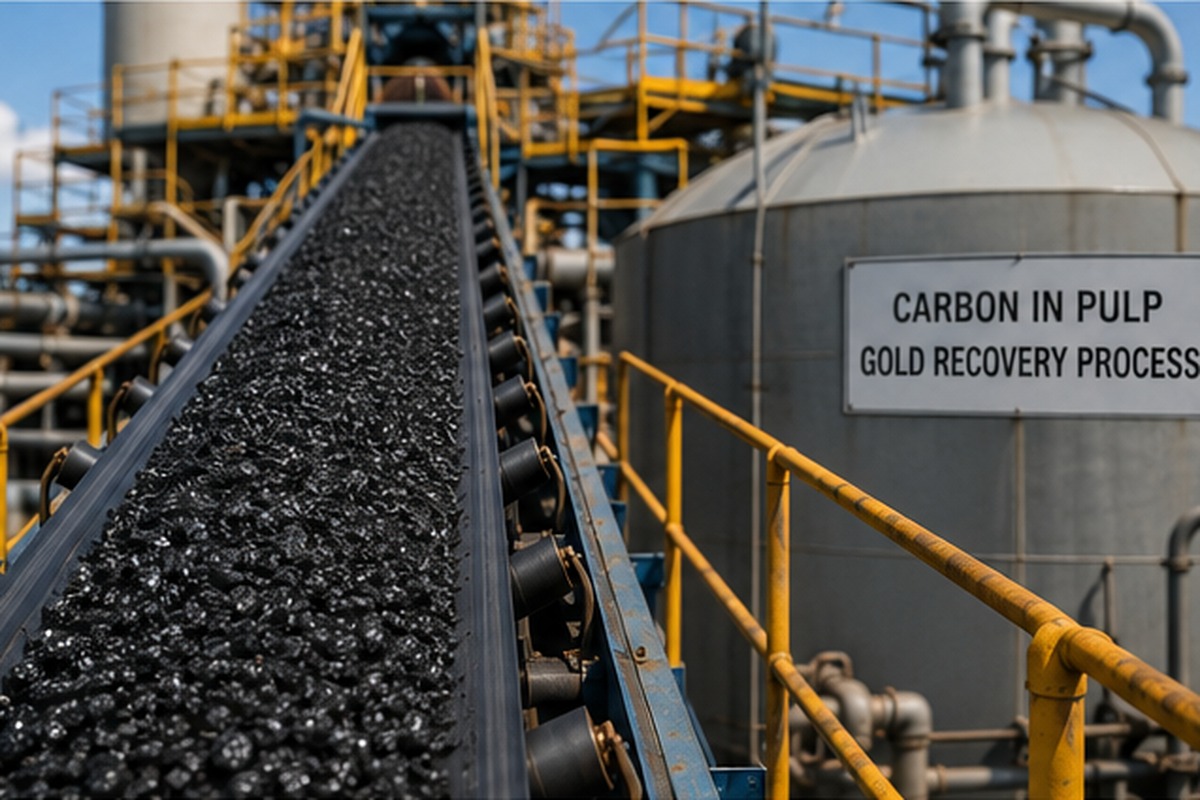
In carbon-in-pulp and carbon-in-leach gold recovery circuits, activated carbon provides the surface onto which dissolved gold species are adsorbed from process solution. The carbon then moves through downstream recovery and regeneration stages before being returned to service.
That repeated duty means activated carbon for gold recovery should be selected on process performance and physical durability, not simply price per tonne. A useful next step is our guide on activated Carbon in Gold Recovery: What Ghana's Mining Operations Need to Know, which looks at the related practical considerations in more detail.
A carbon that loads gold effectively but breaks down rapidly can increase losses and replacement consumption. A very hard carbon with poor adsorption behaviour may also underperform. Selection is therefore a balance of activity, strength, particle characteristics, consistency and cost. A useful next step is our guide on frothers in Flotation: Selection, Performance and Supply Considerations, which looks at the related practical considerations in more detail.
Understand the Plant Before Comparing Products
The best carbon cannot be selected from a datasheet in isolation. Procurement should understand the circuit in which the material will operate. A useful next step is our guide on hydrogen Peroxide in Mining: Cyanide Detoxification and Procurement Considerations, which looks at the related practical considerations in more detail.
Important context includes whether the plant uses CIL or CIP, solution chemistry, contact time, carbon concentration, screen sizes, transfer systems, regeneration conditions and the site’s history of carbon losses.
Metallurgical personnel should define which performance characteristics are most important. Procurement can then compare products against a plant-relevant specification instead of relying on generic marketing values.
Adsorption Activity Matters
Activated carbon needs sufficient adsorption performance to recover dissolved gold effectively under the conditions of the circuit. Suppliers may report different activity tests or adsorption indicators, so buyers should understand what each test actually measures.
A high headline number is useful only when the test method is known and relevant. Procurement and metallurgy should compare equivalent test methods and, where possible, relate supplier data to plant or laboratory performance.
Consistency is just as important as the initial value. Large variation between batches can make circuit behaviour less predictable.
Hardness and Attrition Affect Carbon Loss
Activated carbon moves through tanks, pumps, screens and transfer systems. Physical degradation can create fines that are difficult to retain and may carry adsorbed gold out of the intended recovery circuit.
Hardness and abrasion or attrition resistance are therefore commercially important. A cheaper carbon with a higher breakage rate may create greater replacement demand and potentially greater gold-bearing carbon loss.
Procurement should ask how physical strength is measured, review batch documentation and compare actual site consumption after any product change.
Particle Size Distribution Must Fit the Circuit
Granular carbon must be large enough to be retained by the plant’s screening system while still providing suitable mass transfer and adsorption performance.
Too much undersize material can increase screening and loss problems. Excessive oversize or an unsuitable distribution may affect kinetics and handling.
The purchasing specification should therefore state the required particle size range and acceptable fines, using a clearly defined test method. Receiving inspection can then check whether delivered material matches what was ordered.
Raw Material and Manufacturing Consistency
Activated carbons used in gold recovery are commonly produced from carbonaceous raw materials and processed to create a porous adsorbent. The manufacturing and activation process influences pore structure and physical properties.
For the buyer, the practical issue is repeatability. A supplier should be able to provide consistent material from batch to batch and documentation that allows the mine to trace what was delivered.
A strong qualification process evaluates the product as supplied over time, not only the carefully selected sample used during an initial trial.
Do Not Select on Iodine Number Alone
Iodine number is widely used as an indicator of activated carbon adsorption capacity, particularly for smaller molecules, but it is not a complete predictor of gold-circuit performance.
Gold adsorption depends on the carbon’s pore structure and the operating environment. Physical strength, particle size, fouling behaviour, regeneration and circuit conditions also matter.
Procurement should therefore resist reducing a carbon specification to one familiar laboratory number. The useful specification is the combination of properties that protects actual plant performance.
Trial New Carbon Under Controlled Conditions
When a mine is considering a significant product or supplier change, a controlled evaluation is usually more informative than a paper comparison alone.
The technical team can compare laboratory activity, physical properties and, where appropriate, plant performance. The trial should have defined success criteria before it begins.
Procurement should also record the commercial side of the trial: delivered price, expected consumption, lead time, packaging, availability and supplier support. A technically acceptable carbon still needs a reliable supply chain.
Calculate Cost Around Consumption and Losses
The cheapest carbon per tonne may not produce the lowest annual cost. A useful comparison considers purchase price together with replacement rate, attrition, carbon losses, adsorption performance and the operational effect of inconsistent batches.
If Product A costs more but survives longer and reduces replacement consumption, the total cost can be lower. Conversely, premium pricing needs to be justified by measurable performance rather than reputation alone.
The plant should therefore monitor carbon consumption and loss after supplier changes. Procurement decisions become stronger when they are connected to operating data.
Build a Practical Activated Carbon Specification
A useful RFQ can include carbon type, required particle size distribution, activity test and minimum value, hardness or attrition requirement, moisture or ash limits where relevant, packaging, quantity, batch documentation and delivery schedule.
The exact parameters should come from the mine’s metallurgical requirements. The supplier should state test methods so quotations can be compared on an equivalent basis.
Aviv Kitov Group supports mining operations with activated carbon and other mineral-processing chemicals through regional and international sourcing. For a meaningful quotation, provide the required specification, quantity, packaging, delivery location and required date. A useful next step is our guide on caustic Soda in Gold Processing: Uses, Quality and Procurement Considerations, which looks at the related practical considerations in more detail.
Discuss Your Industrial Chemical Requirement With Aviv Kitov Group
Aviv Kitov Group supports industrial and mining organisations in Ghana with specialised chemical supply and strategic procurement across regional and international markets. For the wider context, our guide on mining Chemicals in Ghana: A Practical Guide to Reagents, Supply and Process Risk brings the main procurement considerations together in one place.
Our sourcing approach begins with the technical and operational requirement, then considers quantity, packaging, delivery timing, documentation and commercial conditions.
Send us the product, specification, quantity, preferred packaging, delivery location and required delivery date, and our team can assess suitable sourcing options.
For the fastest assessment, include:
- product or material required
- technical specification or grade
- quantity
- preferred packaging
- delivery location
- required delivery date
Pingback: Mining Chemicals in Ghana: Reagents, Supply & Process Risk
Pingback: Flotation Frothers Mining: Selection & Supply Guide
Pingback: Mining Flocculants Ghana: Polyacrylamide in Processing