
A good purchase order begins before the price comparison
Industrial chemicals can look simple on a procurement list: product, quantity and price. In practice, concentration, grade, packaging, documentation, lead time and process performance can make apparently similar offers very different.
These twenty questions provide a practical final check for mines, manufacturers, water-treatment plants and other industrial buyers in Ghana.
Questions 1 to 5: Are we buying the right product?
1. What exact chemical, grade and concentration does the process require? The common name alone may not be enough.
2. Which specification parameters are genuinely critical? Separate process requirements from limits that do not affect the application.
3. Are equivalent products allowed? If yes, define who approves them and what evidence is required.
4. Has the proposed manufacturer or product been used before? A new source may require technical qualification.
5. Do we have the current SDS and relevant technical documentation? Obtain these before the material reaches site.
Questions 6 to 10: Are the quotations truly comparable?
6. Are all suppliers quoting the same concentration or assay? Normalise active content where necessary.
7. Is the price delivered to the same location? Ex-warehouse and delivered-to-site prices should not be compared directly.
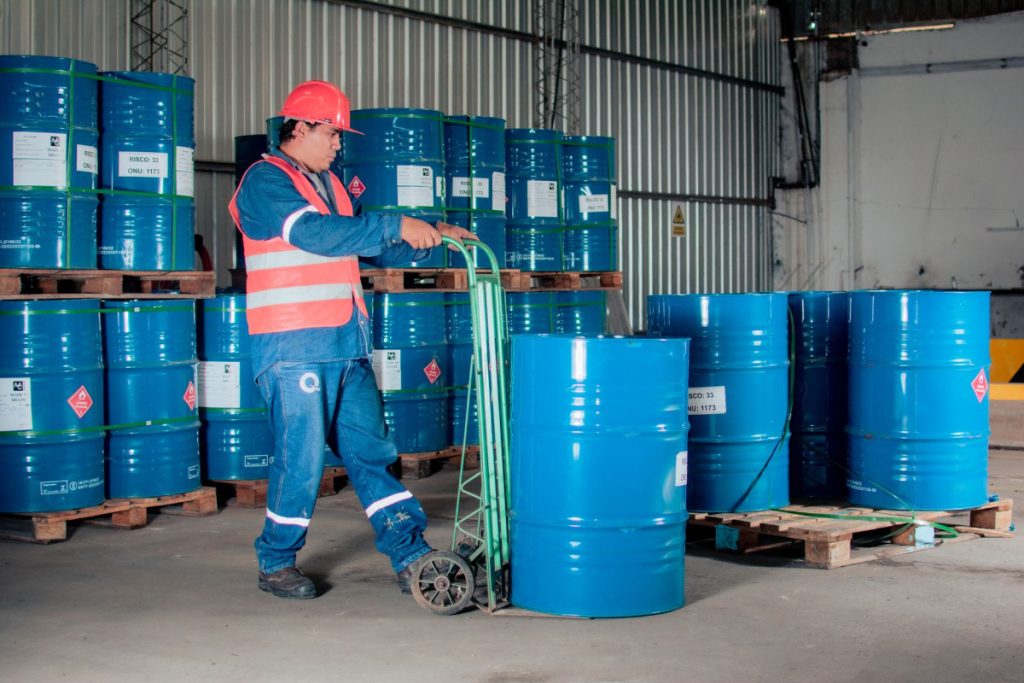
8. Is packaging equivalent? Bags, drums, IBCs and bulk supply create different handling and freight costs.
9. What is the realistic lead time? Understand whether the product is in stock, imported or manufactured to order.
10. What payment and price-validity terms apply? Cash timing and currency exposure can change the commercial result.
Questions 11 to 15: Can the site receive and use it?
11. Is there enough suitable storage capacity? Check usable capacity, not just nominal warehouse or tank volume.
12. Is the chemical compatible with the existing tank, pump and dosing system? Concentration changes can matter.
13. Is it properly segregated from incompatible chemicals? Storage should follow the SDS and site procedures.
14. Can the site receive the proposed package or tanker? Confirm unloading equipment, connections and vehicle access.
15. Does the quantity make sense for shelf life and consumption? A larger order is not cheaper if part of it deteriorates.
Questions 16 to 20: How resilient is the supply?
16. What happens if this delivery is late? Understand the operational consequence of a stockout.
17. Is there a qualified alternative supplier or product? An untested phone number is not a contingency.
18. How has this supplier performed previously? Review delivery, quality, documentation and packaging incidents.
19. Do we know where the product is manufactured and how it reaches Ghana? Supply-chain visibility improves planning.
20. Are we measuring consumption after purchase? Cost per active unit, tonne processed or cubic metre treated can reveal whether the buying decision performs as expected.
Use the questions as a repeatable procurement discipline
Not every purchase requires a lengthy committee review. A familiar locally stocked chemical may pass these checks quickly, while a critical imported reagent deserves more attention.
The value of the checklist is consistency. It prevents urgency, habit or an attractive headline price from quietly removing controls that protect the operation.
Better chemical buying is better operational planning
The strongest industrial procurement teams connect what the plant needs with what the market can reliably supply. They know the specification, understand the logistics, measure supplier performance and keep enough inventory for realistic uncertainty.
That is how chemical procurement becomes more than placing orders. It becomes part of keeping the operation productive, predictable and commercially disciplined.
Discuss Your Requirement With Aviv Kitov Group
Aviv Kitov Group supports industrial organisations in Ghana with specialised chemical sourcing across regional and international markets. A useful sourcing discussion starts with the actual process requirement, including the approved specification or grade, quantity, packaging, delivery location and required date. For the wider context, our guide on strategic Sourcing for Industrial Chemicals in Ghana: Cost, Risk and Supplier Strategy brings the main procurement considerations together in one place.