
Packaging is part of the commercial model
Industrial buyers often treat packaging as a line item after the chemical specification has already been decided. In practice, drums, IBCs and bulk delivery create very different logistics and handling systems. For a closer look at this part of the procurement process, our guide on industrial Chemical Supply Chain in Ghana: Inventory, Imports and Logistics explains the practical considerations in more detail.
The right format depends on consumption rate, delivery frequency, storage capacity, unloading equipment, road access, labour and the hazard profile of the product. A packaging decision can therefore change the total delivered cost substantially.
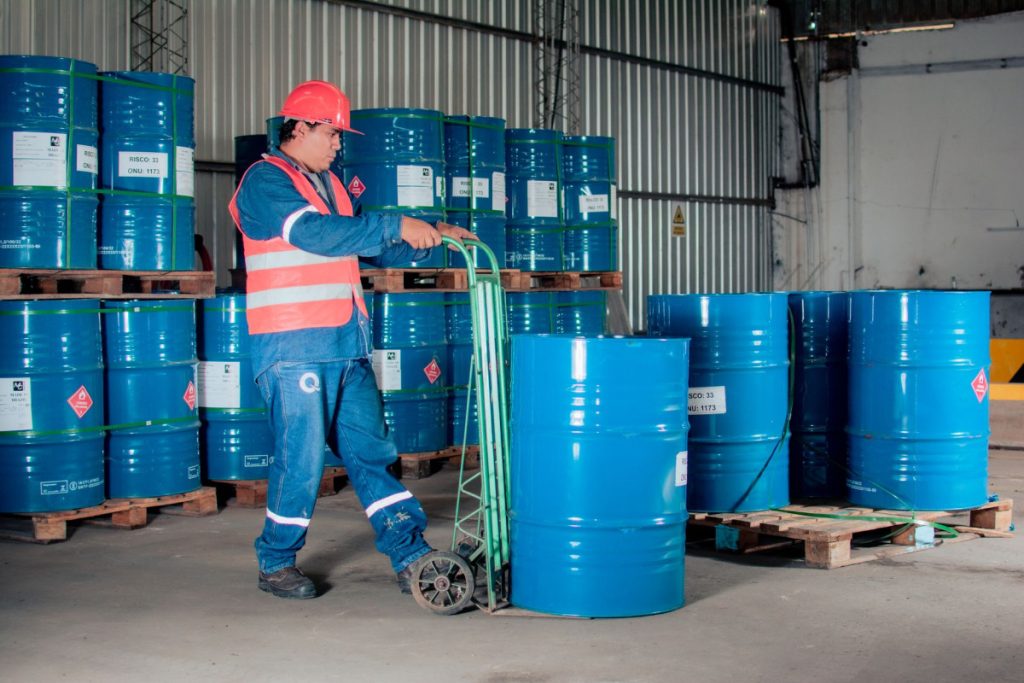
Drums offer flexibility but create handling
Drums can work well for lower-volume requirements, multiple dosing points or sites that do not have bulk storage. They are easy to count and isolate by batch, but larger consumption quickly creates more manual handling, more packaging waste and more residual product.
Buyers should include drum return, disposal or recycling arrangements in the commercial comparison rather than treating empty packaging as someone else’s problem.
IBCs can reduce handling at medium volumes
IBCs provide more product per unit and can simplify transfer where the site has suitable pumps and connections. They reduce the number of containers compared with drums but require appropriate storage space, forklift handling and containment.
Not every chemical or concentration is suitable for every IBC material, so compatibility should be confirmed before a packaging change is approved. For a closer look at this part of the procurement process, our guide on scale Inhibitors in Oil and Gas Production: Why Chemical Performance Matters explains the practical considerations in more detail.
Bulk tankers work when consumption justifies infrastructure
High-volume users may benefit from bulk deliveries because packaging cost and handling per tonne can fall significantly. However, the customer needs a suitable storage tank, safe unloading point, transfer connections, containment and enough consumption to turn the inventory.
A bulk tanker arriving at a site with inadequate storage or poor road access quickly turns a theoretical saving into an operational problem.
Residual product affects real yield
Drums and IBCs can retain material after normal transfer. Highly viscous products may leave more residue than thin liquids. The difference becomes commercially significant across many containers.
Procurement can work with operations to understand how much product is actually recoverable from each package and whether returnable or specialised containers improve economics. For a closer look at this part of the procurement process, our guide on methanol in Oil and Gas Operations: Uses, Safety and Supply Considerations explains the practical considerations in more detail.
Packaging changes working capital
A move to larger deliveries may reduce freight per tonne but increase the value of stock held on site. If consumption is slow, the business may tie up cash in inventory and create shelf-life or degradation risk.
The strongest order quantity therefore balances logistics savings with stock turnover, storage capacity and supplier lead time. For a closer look at this part of the procurement process, our guide on strategic Sourcing for Industrial Chemicals in Ghana: Cost, Risk and Supplier Strategy explains the practical considerations in more detail.
Choose the package around the site, not the catalogue
Suppliers can offer multiple formats, but the customer’s infrastructure should decide which ones are realistic. The useful comparison includes chemical price, freight, handling, storage, safety, packaging management and inventory. For a closer look at this part of the procurement process, our guide on corrosion Inhibitors in Oil and Gas: Selection and Chemical Management explains the practical considerations in more detail.
When all of those costs are visible, packaging becomes a strategic procurement choice rather than an afterthought. For a closer look at this part of the procurement process, our guide on glycols in Oil and Gas: MEG, TEG and Procurement Considerations explains the practical considerations in more detail.
Discuss Your Requirement With Aviv Kitov Group
Aviv Kitov Group supports industrial organisations in Ghana with specialised chemical sourcing across regional and international markets. The strongest enquiries are the ones that define the actual operating requirement clearly enough for suppliers to compare the right grade, concentration, packaging, lead time and delivery route. For a closer look at this part of the procurement process, our guide on safe Chemical Storage and Handling in Ghana: A Practical Industrial Guide explains the practical considerations in more detail.
If you are reviewing a new source or planning a recurring requirement, send us the product name, approved specification or grade, expected quantity, preferred packaging, delivery location and required date. That gives our team enough context to assess realistic options and discuss the requirement properly.
Pingback: Chemical Inventory Planning: How Ghanaian Industrial Buye...
Pingback: Industrial Chemical Storage in Ghana: What Procurement Sh...
Pingback: Why Chemical Lead Times Change: A Ghanaian Industrial Buy...