
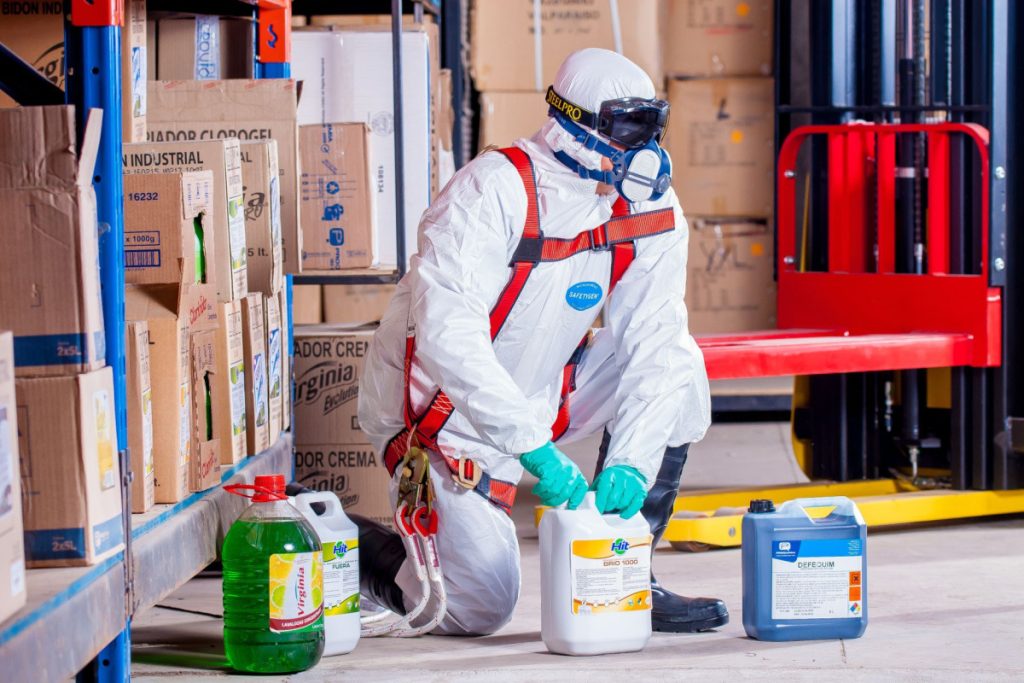

Bulk supply removes packaging but increases the importance of the interface
Moving from drums or IBCs to tanker delivery can reduce handling and packaging cost for high-volume chemicals. It also transfers a large quantity of material in one operation, which makes preparation at the receiving point essential.
The supplier, transporter and customer should understand the delivery arrangement before dispatch.
Confirm there is enough tank capacity
Available tank volume should be checked against the expected delivery quantity while maintaining the site’s required operating and safety limits. The figure should be based on a reliable level reading rather than an assumption that the previous delivery has been consumed.
A tanker waiting because the tank is full creates cost and pressure that should have been avoided.
Verify the correct tank and connection
Sites with multiple chemicals need clear identification of tanks, fill points and transfer lines. Connections should be compatible with the delivery equipment and suitable for the chemical. A useful next step is our guide on cIP Chemicals for Food and Beverage Plants: Cleaning-in-Place Basics, which looks at the related practical considerations in more detail.
Physical labelling and a receiving procedure help prevent a wrong-tank transfer, one of the most serious errors a bulk receiving operation can make.
Agree who provides transfer equipment
Depending on the supply arrangement, hoses, pumps, couplings or compressors may be supplied by the transporter or customer. Responsibility should not be discovered after arrival.
Equipment condition and chemical compatibility should be managed under the site’s approved procedure. A useful next step is our guide on chemical Compatibility with Equipment, Seals and Surfaces, which looks at the related practical considerations in more detail.
Check access and vehicle restrictions
Road condition, turning space, overhead restrictions, security access, weighbridge requirements and permitted delivery hours can all affect the trip.
Giving the supplier accurate site information reduces delays and helps the transporter send suitable equipment.
Documents should arrive with or before the load
The purchase order, delivery note, SDS and COA where required should identify the correct product and batch. Quantity documentation should follow the agreed commercial method.
Receiving personnel should know which discrepancies require the transfer to be paused.
Define the transfer procedure and emergency controls
The site’s HSE system should cover PPE, exclusion zones, communication, spill response and the sequence for connecting, transferring and disconnecting.
Procurement’s role is not to write operating procedures, but it should ensure the commercial supply model does not conflict with them.
Close the delivery properly
After transfer, quantity should be reconciled using the agreed method and any leaks, delays or equipment problems recorded. A useful next step is our guide on industrial Degreasers: How to Match Chemistry to the Cleaning Problem, which looks at the related practical considerations in more detail.
That feedback helps procurement evaluate the real performance of the supplier and transporter, not just whether the product eventually reached the tank.
Discuss Your Requirement With Aviv Kitov Group
Aviv Kitov Group supports industrial organisations in Ghana with specialised chemical sourcing across regional and international markets. A useful sourcing conversation starts with the actual operating requirement, including specification, concentration, packaging, quantity, delivery location and required date. For the wider context, our guide on industrial Cleaning Chemicals in Ghana: A Guide for Manufacturing Operations brings the main procurement considerations together in one place.
Pingback: pH Adjustment Chemicals in Industrial Water Treatment: Ac...