
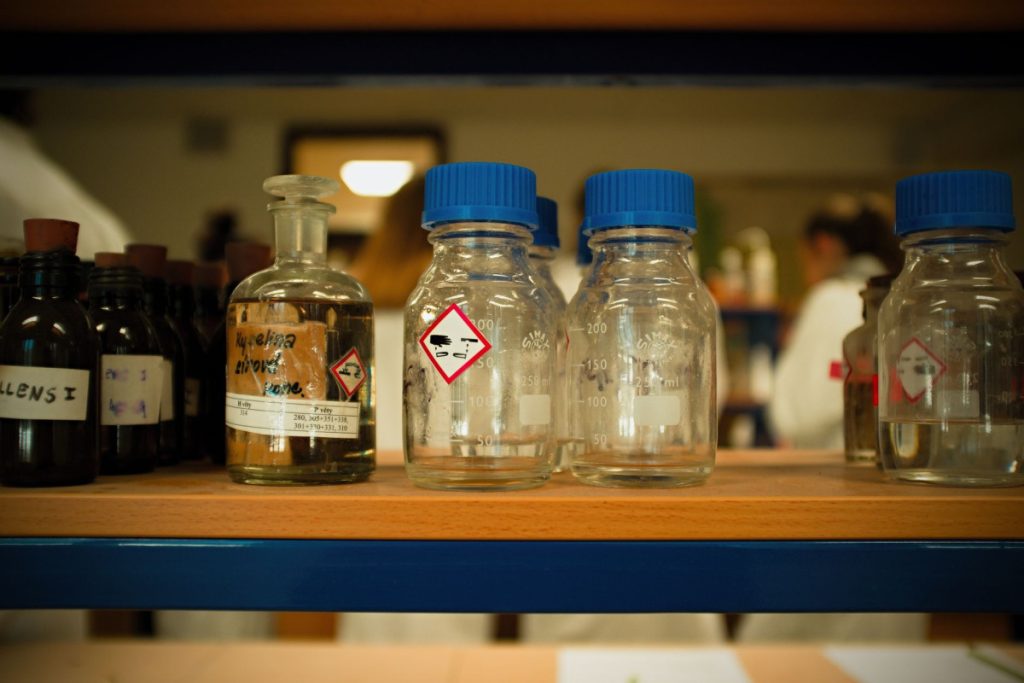

Cooling towers create favourable conditions for biological growth
Warm water, air, sunlight and nutrients can support bacteria, algae and biofilm in open recirculating cooling systems. Uncontrolled growth can reduce heat transfer, restrict flow and contribute to under-deposit corrosion.
Biocide treatment is therefore an important part of many cooling-water programmes, but it should not be selected as an isolated purchasing item.
Oxidising biocides act through oxidation
Chlorine-based products and other oxidising biocides are commonly used to control microorganisms. Their effectiveness depends on water chemistry, demand, pH and the way residual is maintained.
A product that works well in one cooling system may require different control in another because the water and contamination load are different.
Non-oxidising biocides use different mechanisms
Non-oxidising products can complement or alternate with oxidising treatment, particularly where biofilm or resistant populations are a concern. Different active ingredients have different application limits and compatibility considerations. A useful next step is our guide on transporting Hazardous Chemicals in Ghana: Procurement and Logistics Considerations, which looks at the related practical considerations in more detail.
Selection should be made by competent water-treatment personnel with reference to the system and applicable safety requirements.
Biofilm changes the problem
Once established, biofilm can protect microorganisms from treatment and trap deposits against metal surfaces. Mechanical cleaning, dispersants or a revised treatment programme may be required alongside biocide.
Simply increasing chemical dose without understanding the system can waste product and fail to solve the underlying issue.
Monitoring matters
Treatment programmes may use oxidant residual, microbiological testing, visual inspection and operating indicators to assess control. The appropriate methods depend on the programme.
Procurement should understand what monitoring support is required when comparing treatment suppliers.
Storage and chemical compatibility need attention
Biocides can be hazardous products and should be stored, handled and dosed according to the SDS, supplier instructions and site procedures. Oxidisers in particular require appropriate segregation from incompatible materials.
A change of product may therefore require HSE and dosing-system review.
Buy a controlled programme, not an impressive product name
The objective is a clean heat-transfer system with microbiological activity under control, acceptable corrosion and manageable chemical consumption.
Industrial buyers create more value by comparing programme performance, technical support and cost in use than by choosing biocides solely from price per container.
Discuss Your Requirement With Aviv Kitov Group
Aviv Kitov Group supports industrial organisations in Ghana with specialised chemical sourcing across regional and international markets. A useful sourcing discussion starts with the actual process requirement, including the approved specification or grade, quantity, packaging, delivery location and required date. For the wider context, our guide on safe Chemical Storage and Handling in Ghana: A Practical Industrial Guide brings the main procurement considerations together in one place.