Fine Particles Create a Separation Problem
After crushing, grinding and mineral processing, mines often need to separate fine solids from water or process solution. Very small particles can remain suspended and settle slowly, making thickening, clarification and dewatering more difficult.
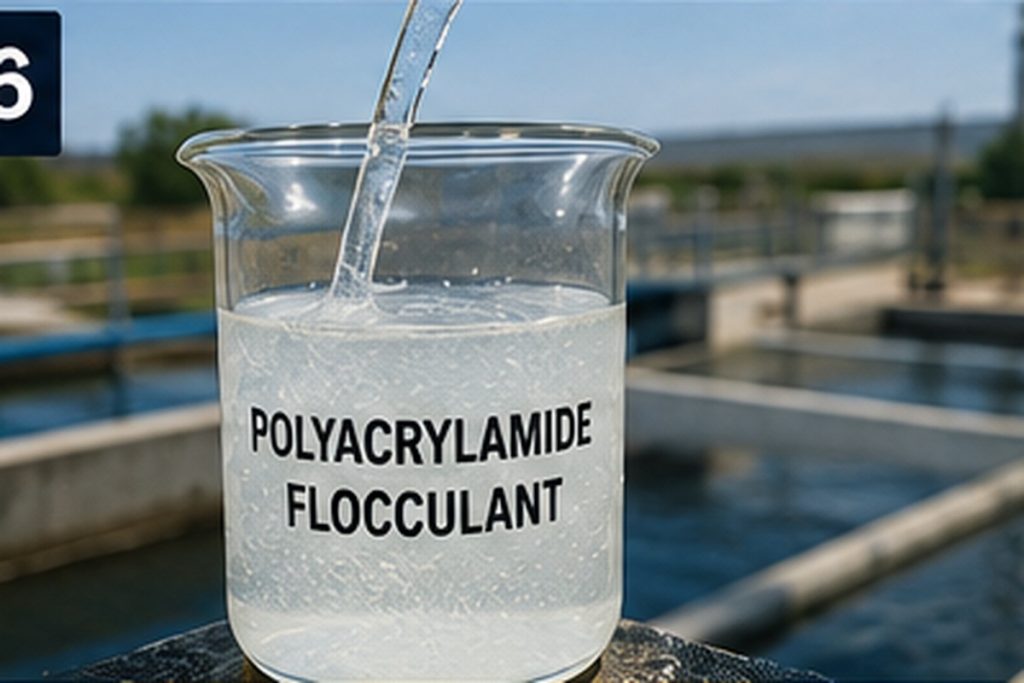
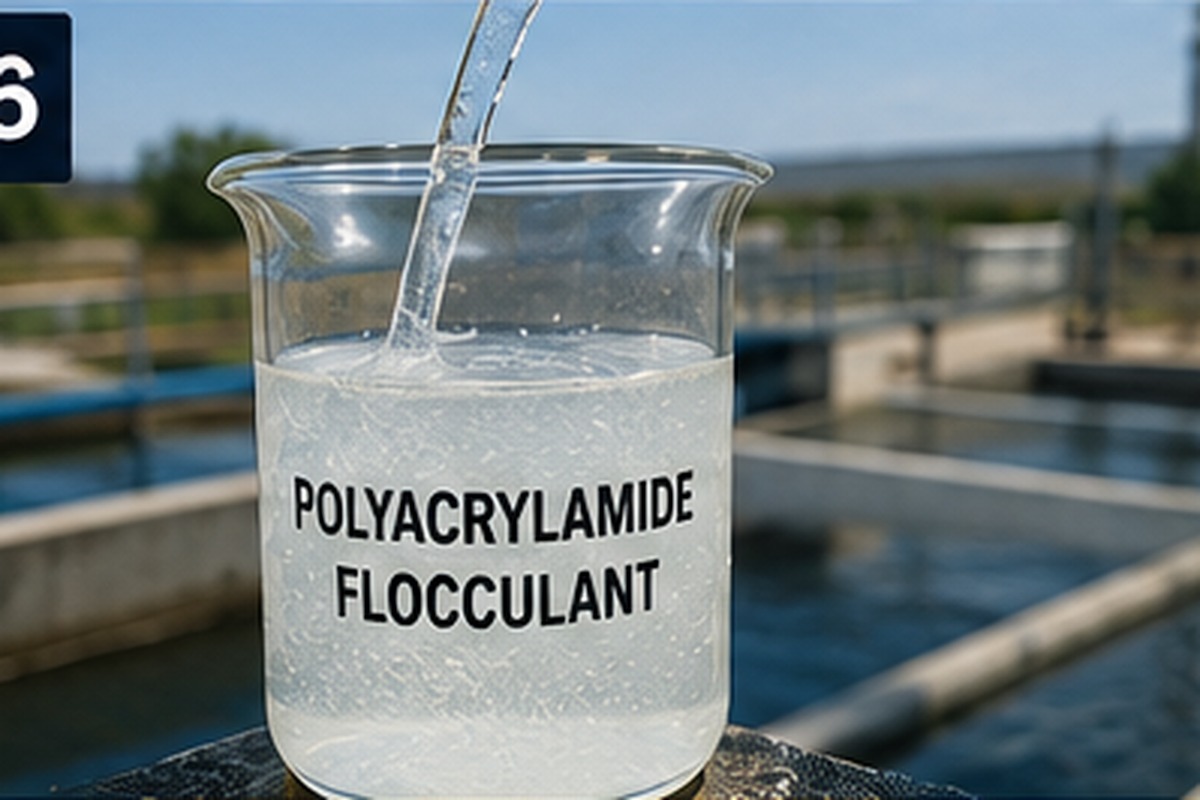
Flocculants help by bringing fine particles together into larger aggregates that settle more readily. In many mineral-processing applications, high-molecular-weight polyacrylamide products are used for this purpose.
The chemistry sounds simple, but product selection is highly site-specific. Ore mineralogy, particle size, water chemistry, slurry conditions and equipment all influence performance. A useful next step is our guide on how to Select Activated Carbon for Gold Recovery, which looks at the related practical considerations in more detail.
Polyacrylamide Is a Family, Not One Product
Procurement teams should avoid treating PAM or flocculant as a complete specification. Polyacrylamide products can differ in molecular characteristics, ionic charge, charge density, physical form and formulation. A useful next step is our guide on xanthates in Mineral Processing: What Procurement Teams Should Know, which looks at the related practical considerations in more detail.
Those differences affect how the polymer interacts with particles in a particular slurry. A product that performs well at one mine may be inefficient at another.
The technical team should therefore define the approved product or functional performance requirement before procurement compares alternatives.
Test Work Should Come Before Large-Scale Substitution
Bench testing can compare settling behaviour, clarity, dosage and floc structure under controlled conditions. Where the commercial impact is significant, plant trials can then confirm whether laboratory performance translates into the actual circuit.
Test work is especially important when ore characteristics or process water change. A historical flocculant choice may no longer be optimal if the feed has changed materially.
Procurement should resist replacing an established flocculant solely because another polymer is cheaper per kilogram. The correct comparison is cost at the dosage and performance required by the plant.
Dosage Drives the Real Cost
Suppose Product A costs less per kilogram but requires substantially more polymer to achieve the same settling performance. Product B may be the lower-cost option even with a higher unit price.
A useful commercial measure is reagent cost per tonne of solids treated or another process-relevant unit. The mine can then compare supplier price with actual dosage and performance.
Overdosing also deserves attention. More flocculant does not necessarily improve separation and can create poor floc structure, unnecessary cost or downstream issues.
Preparation Quality Can Make a Good Polymer Look Bad
Dry polymer normally requires controlled wetting, mixing and maturation before use. Poor preparation can produce incomplete dissolution, polymer lumps or mechanical degradation.
That means a supplier trial should not be judged without checking the preparation system. Water quality, make-up concentration, mixing energy, ageing time and dosing equipment can all influence apparent performance.
Procurement and operations should separate product-quality problems from preparation-system problems before changing supplier.
What to Put in the Purchasing Specification
A practical RFQ should identify the approved product or required polymer characteristics, physical form, packaging, quantity, delivery schedule and documentation.
If the mine is inviting alternatives, the RFQ should state the process duty and required test or trial procedure. Suppliers should not be allowed to imply equivalence simply because two products share the label polyacrylamide.
Batch traceability and Certificates of Analysis can support quality assurance, particularly where the operation has experienced variation.
Storage Conditions Protect Product Performance
Flocculants should be stored according to manufacturer guidance and protected from conditions that can damage packaging or product quality. Dry products need appropriate moisture protection, while liquid or emulsion products may have different storage requirements.
Warehouse teams should understand shelf-life considerations and use stock rotation. Large purchases that sit for excessive periods can undermine the saving achieved through bulk pricing.
Inventory planning should therefore balance freight economics with realistic consumption and storage life.
Supplier Performance Is More Than Polymer Chemistry
A technically suitable flocculant still needs dependable supply. Mines should track delivery performance, documentation, batch consistency, technical responsiveness and the supplier’s ability to support trials or troubleshooting.
Where a flocculant is critical to thickener performance or water recovery, a shortage can quickly affect downstream operations. Safety stock and approved alternatives should reflect that consequence. A useful next step is our guide on activated Carbon in Gold Recovery: What Ghana's Mining Operations Need to Know, which looks at the related practical considerations in more detail.
The strongest sourcing decision combines metallurgical performance with reliable logistics and total process cost.
Discuss Your Mining Chemical Requirement With Aviv Kitov Group
Aviv Kitov Group supports mining and industrial organisations in Ghana with specialised chemical sourcing across regional and international markets. For the wider context, our guide on mining Chemicals in Ghana: A Practical Guide to Reagents, Supply and Process Risk brings the main procurement considerations together in one place.
For a useful supply assessment, provide the product, technical specification or approved grade, quantity, packaging, delivery location and required date.
Our team can then assess sourcing options against the commercial and operational requirement.
For the fastest assessment, include:
- product or reagent required
- technical specification or approved grade
- quantity
- preferred packaging
- delivery location
- required delivery date
Pingback: Sodium Cyanide Ghana Mining: Procurement & Supply Guide
Pingback: Hydrogen Peroxide Mining Ghana: Detox & Procurement